
I appreciate feeling seen. When Mark was on dialysis the first time, it felt like we were living in a reality no one else understood. A reality where no one could grasp the torture Mark was experiencing day after day. Dialysis seems to literally drain the life out of the patient its working to keep alive.
My mom is one of the most wonderful humans on earth. When words leave her mouth they are kind, life giving, encouraging, pure. She struggled watching her kids navigate a violently sudden new normal. So the day we heard her describe dialysis to a friend, her choice of words surprised us. She called it “Hell’s Waiting Room” then listed the horrors my husband regularly endured.
This was the moment it clicked; the moment I realized this wasn’t just a standard next step in a medical process. I had been so deep in survival mode, it didn’t occur to me that people don’t just eventually go through things like this. We weren’t dramatic or weak. We were experiencing something rare, uncommon. Something most people will never have to understand.
Dialysis does not just filter blood. It siphons time, strength, memory, sleep, appetite, personality, and hope.
Hemodialysis centers don’t allow visitors anymore. Patients are tethered to the machine, utterly alone. The revolving door of dialysis techs and one nurse manager are little comfort. When complications arise, there is no one to hold a hand, no one to advocate, no one to witness the fear. Just the rhythmic whirring of the machine and the knowledge something is going wrong in your body.
Three days a week, a patient arrives to have their entire blood volume removed, filtered 40-60 times outside of their body, then returned. On repeat. For Years.
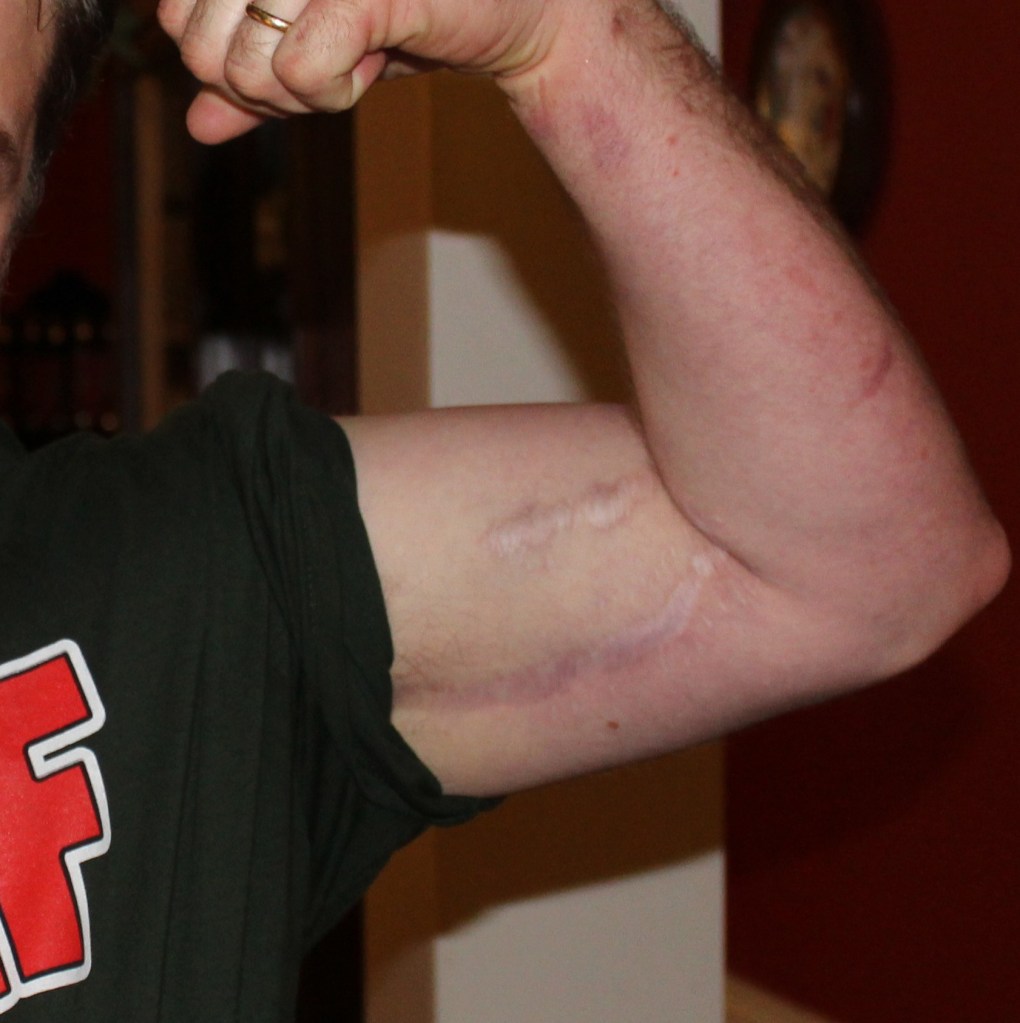
Unexpected Scars:
The lower scar, caused by placing an AV Fistula for dialysis access, extends from Mark’s shoulder to just below the inside of his elbow. We were told the incision would be 3″-4″ long and he would return to work in a few days.
The upper scar is where the 15-16 gauge needles were inserted for dialysis treatments.
Blood pressure crashes became routine for Mark on hemodialysis. The machine would pull too hard and suddenly a headache, nausea, dizziness, or everything would suddenly… go dark. He says it’s terrifying every single time.
If fluid is taken too quickly, his arms and legs seize with cramps so violent he couldn’t speak through them. He never slept through his treatments. Mark’s heart pounded through every treatment. And by the time I picked him up, he would tell me he felt like he had just finished running a marathon he never agreed to run, struggling to breathe, eyes sunken in, shaking, barely able to walk.
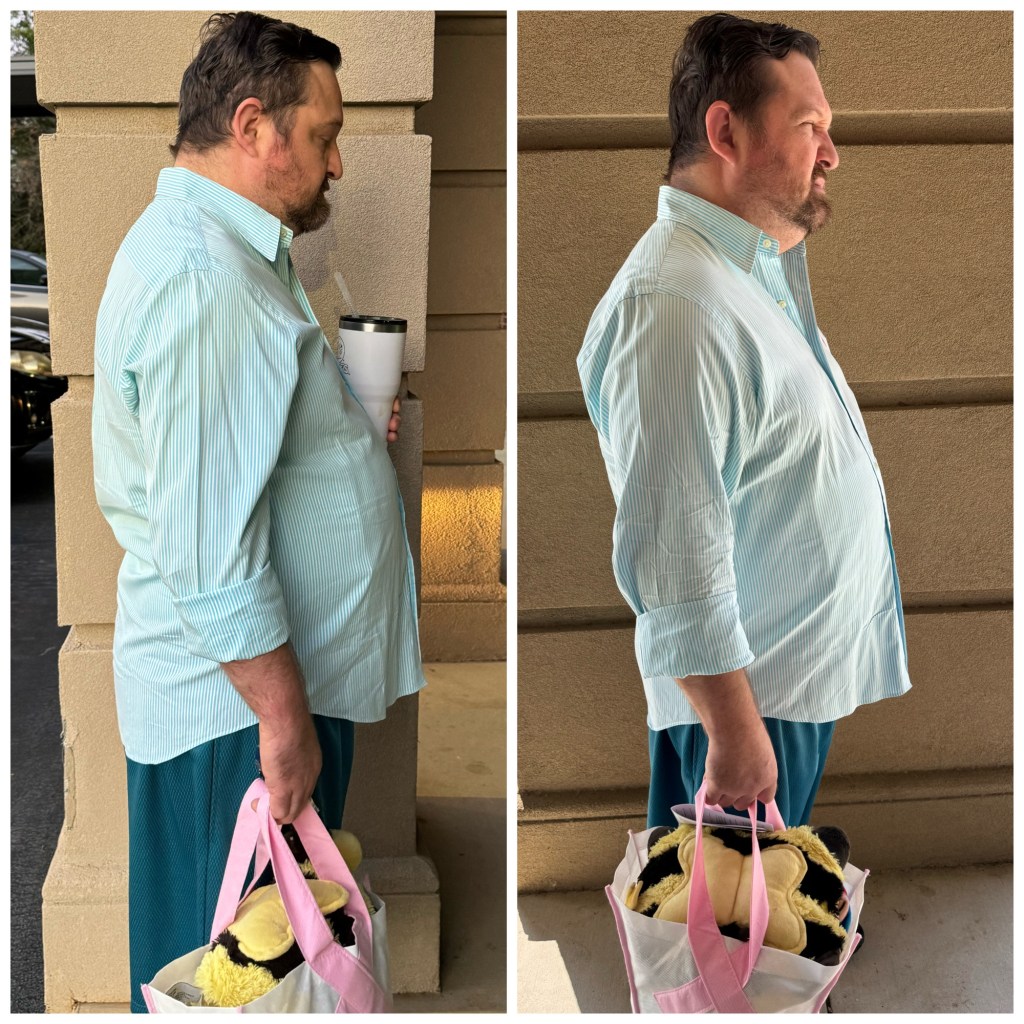
The Impact of Dialysis
There are only about four hours between each picture.
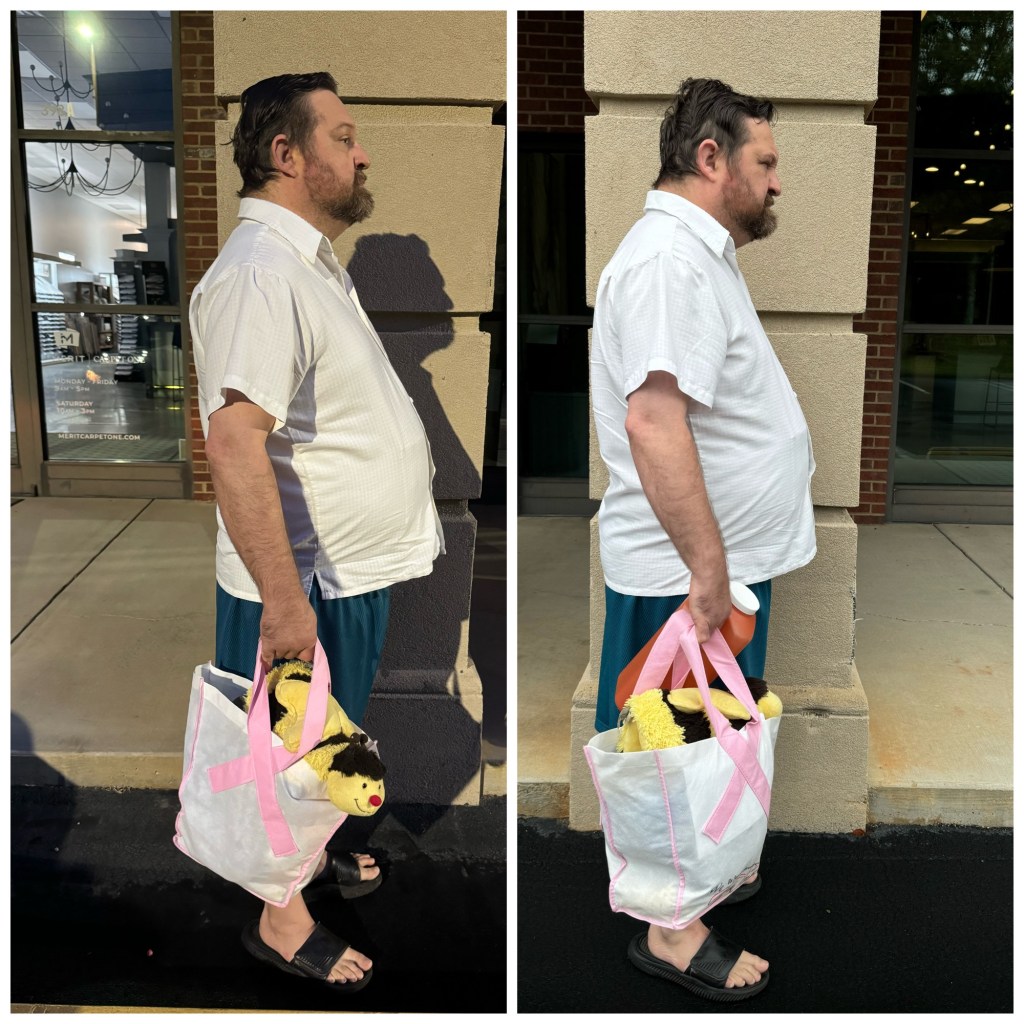
A person does not just get used to dialysis. It doesn’t get easier over time. The longer you are on dialysis, the more impact it has on your heart, organs, muscles, brain, everything. The exhaustion from the work the machine forces your body through during treatment, causes you to feel like your veins are filled with cement, while walking through water.
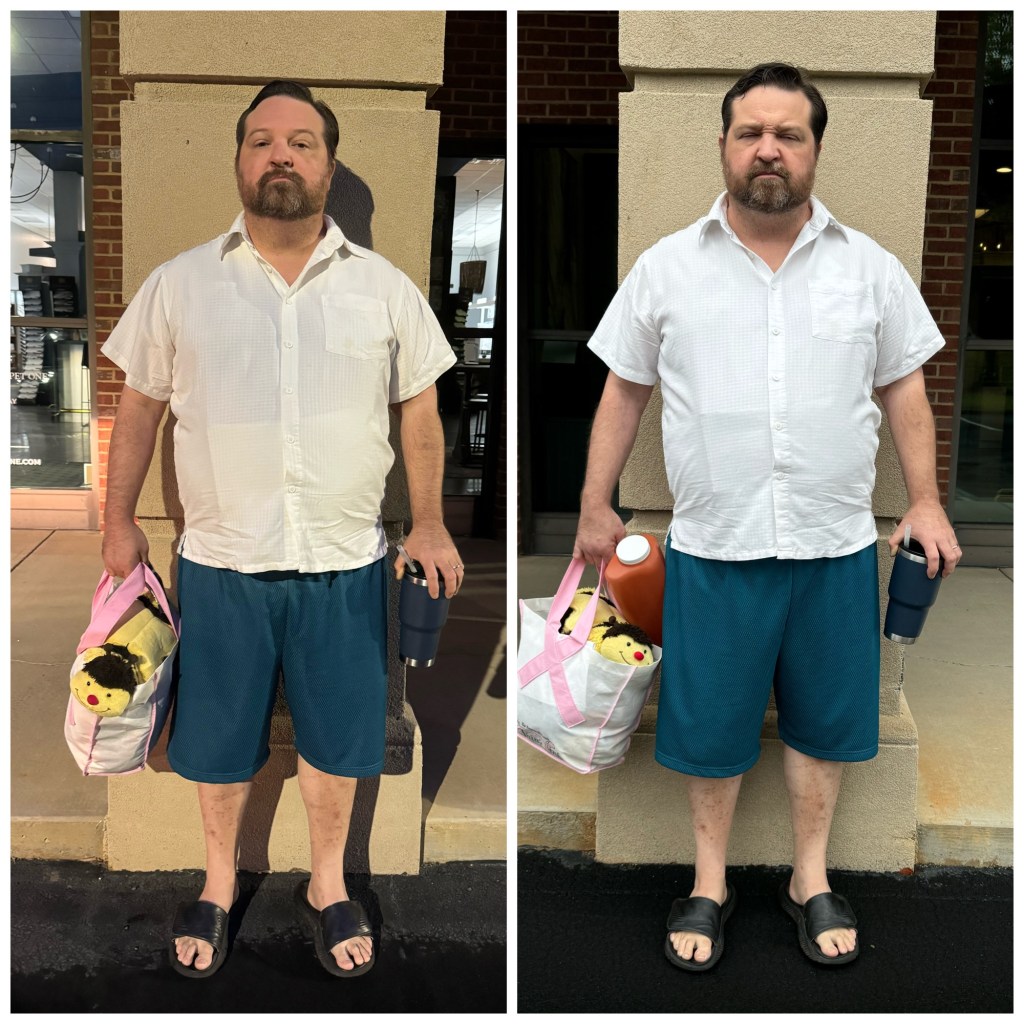
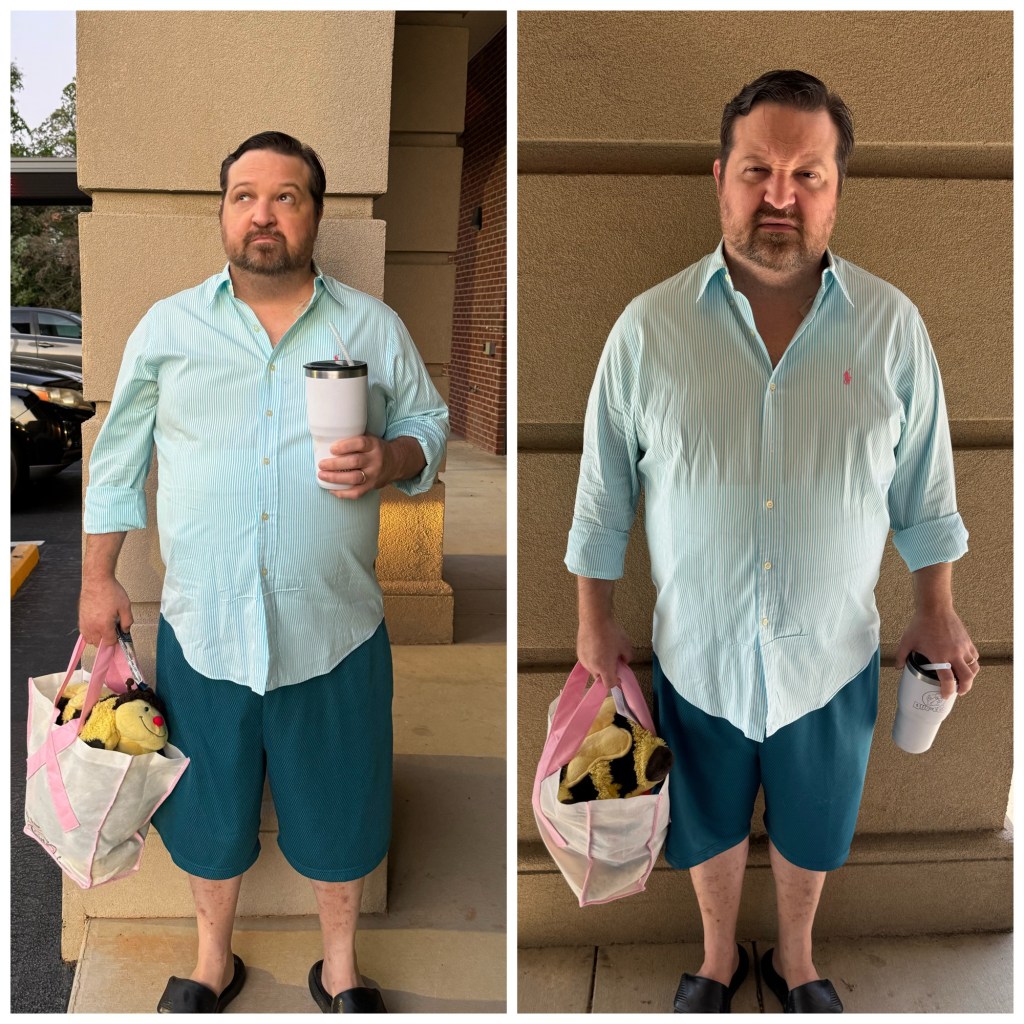
The alleged 4 hour treatment? It’s actually closer to six or seven hours of arrival, waiting, pre-checks, connecting, labs, complications, disconnecting, bleeding control, stabilizing blood pressure, and trying to stand up again without passing out. If crashes happen, the machine alarms, or the body can’t keep up, the clock stretches even longer.
No one told us any of this before Mark reached the point he first needed dialysis. No one prepared us for the cost that isn’t written on a consent form.
While peritoneal dialysis allows Mark to fight in the comfort of our home, he is still fighting for his life everyday. Stay tuned for more on that later on!
 Mark's Fourth Kidney
Leave a comment