MARK’S FOURTH KIDNEY • KIDNEY FAILURE 101
Your Kidneys Do WHAT?!
Understanding what healthy kidneys actually do and why kidney failure
affects so much more than your ability to pee.
When someone tells you that the kidneys filter your blood, they’re technically correct. But that explanation is a little like the mitochondria is the powerhouse of the cell. What even is a mitochondria… or a powerhouse…?
Your kidneys are responsible for an impressive amount of behind-the-scenes work. And when they stop doing those jobs well, the consequences can show up in places that don’t immediately seem connected to your kidneys at all.
First, meet the actual filtration system
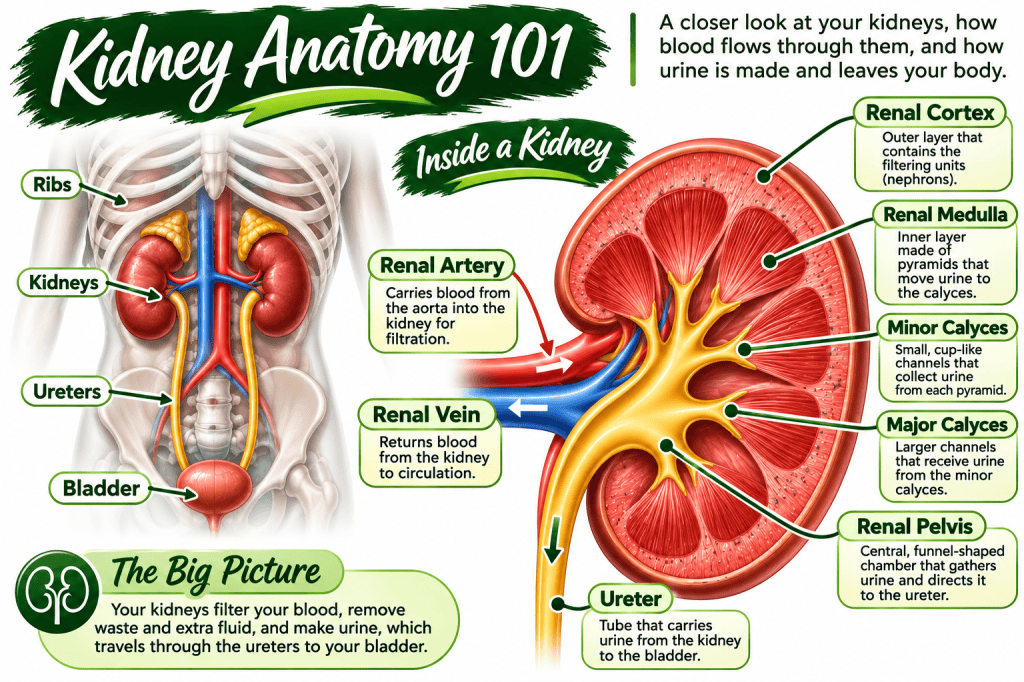
Most people have two kidneys, each roughly the size of a fist, tucked below the rib cage on either side of the spine. Inside each kidney are roughly a million tiny working units called nephrons.
Each nephron has a glomerulus, a cluster of tiny blood vessels that filters fluid and small molecules from the blood, and a tubule, which returns much of the water and useful substances to circulation while helping remove additional waste and acid. The fluid left over becomes urine.
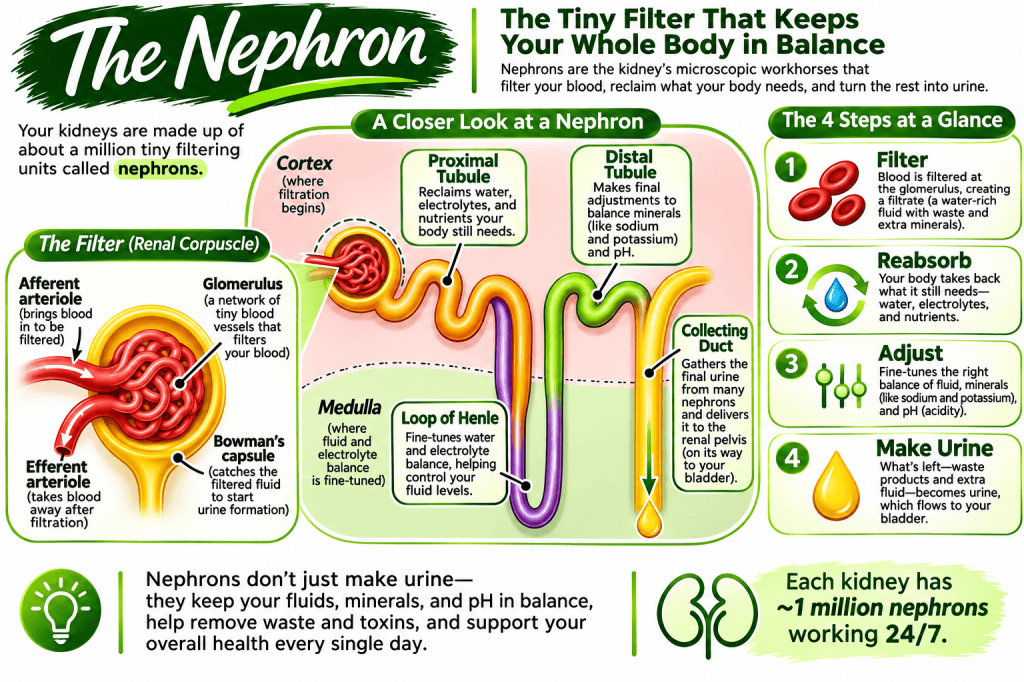
The kidneys aren’t indiscriminately dumping everything out. They’re constantly deciding what your body needs to keep and what it needs to release.
Six jobs your kidneys handle
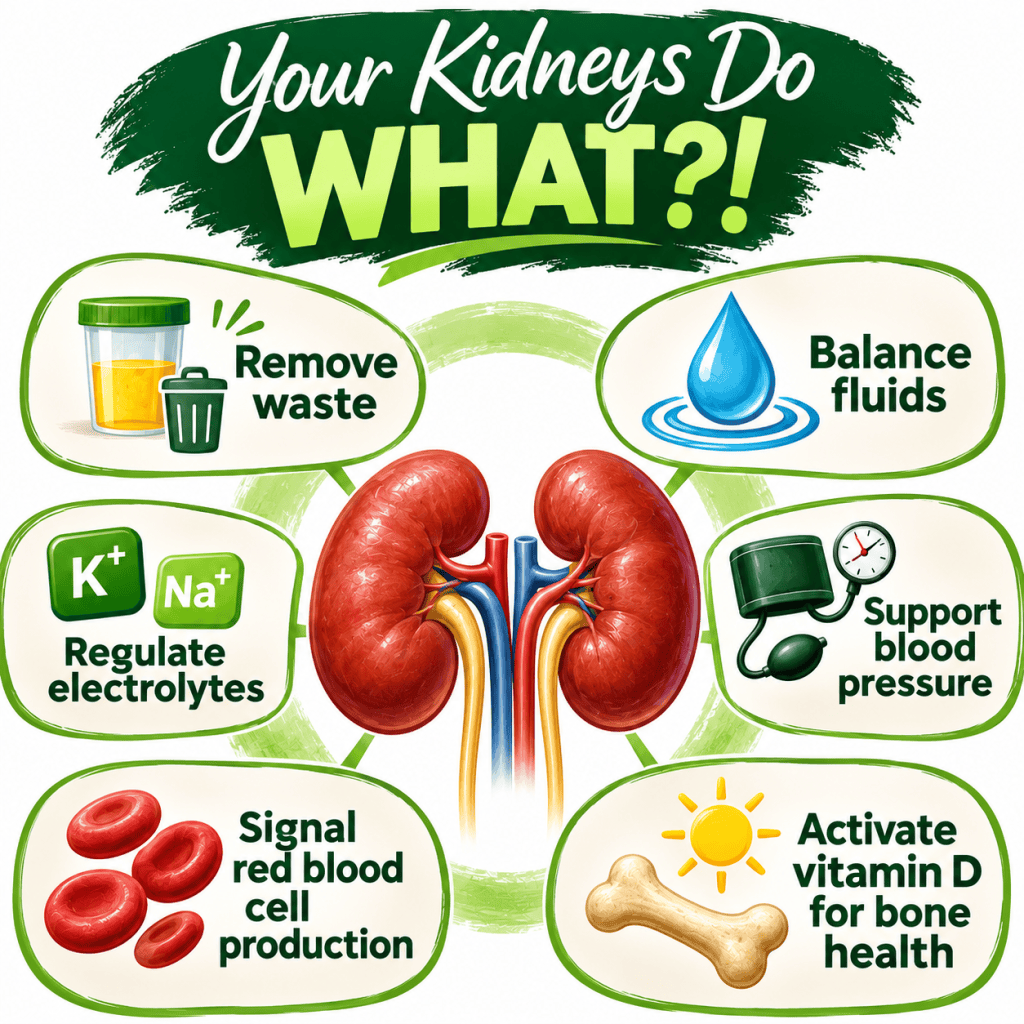
1. Remove metabolic waste
Your body’s metabolism produces waste products, including urea. Healthy kidneys help remove these substances through urine. When kidney function declines, waste can accumulate in the bloodstream. Severe buildup can contribute to symptoms such as nausea, itching, poor appetite, fatigue, and trouble concentrating.
2. Manage your fluid balance
Your kidneys help determine how much water stays in your body and how much leaves as urine. When that system struggles, excess fluid can contribute to swelling, high blood pressure, and sometimes breathing difficulties. But fluid balance is not simply a matter of drinking more or less water. It also depends on the person’s kidney function, medications, and treatment plan.
3. Keep electrolytes in range
Potassium, sodium, calcium, and phosphorus are not just numbers on a lab report. They’re essential to nerve signaling, muscle function, and other processes. Kidneys help regulate these substances, and serious imbalances, especially potassium abnormalities, can become dangerous.
4. Help regulate blood pressure
The kidneys influence blood pressure through sodium and water handling and through hormone signaling, including the renin–angiotensin–aldosterone system(RAAS). This creates a two-way relationship: kidney problems can contribute to high blood pressure, and then high blood pressure can damage the kidneys. The increased pressure creates too much force on the tiny, delicate vessels inside the kidney causing permanent damage.
5. Help your body make red blood cells
Kidneys produce erythropoietin (EPO), a hormone that signals bone marrow to make red blood cells. With chronic kidney disease, EPO production can decrease. That is one reason people with kidney disease may develop anemia, which can contribute to fatigue, weakness, and shortness of breath.
6. Support healthy bones
Kidneys help activate vitamin D and regulate calcium and phosphorus. When kidney function declines, those systems can become disrupted, contributing to the bone and mineral problems associated with chronic kidney disease.
So why does kidney failure affect the whole person?
Because these jobs are connected! If waste removal, fluid regulation, hormone signaling, and mineral balance all become less effective, the effects can reach your heart, muscles, bones, blood, energy levels, and quality of life.
This is also why dialysis is not a complete stand-in for healthy kidneys. Dialysis can remove certain wastes and excess fluid and help manage some electrolyte imbalances, but it does not fully reproduce every function of healthy kidneys. Many people on dialysis treatment also need medications and other treatments to address those missing functions.
A common misconception
“If someone still makes urine, their kidneys must be working fine.” Not necessarily. Urine output alone doesn’t tell us how effectively the kidneys are clearing waste or maintaining the body’s internal balance. Clinicians use blood and urine tests, along with the overall clinical picture, to assess kidney health.
Why we’re starting here
Before we get into dialysis machines, transplant evaluations, or the alphabet soup of lab results, I want to share what those treatments are trying to replace and why the experience of kidney failure is so much bigger than a single diagnosis. There are many medical conditions that can lead to kidney failure. Chronic kidney disease is commonly classified into five GFR stages. How those stages affect someone can vary considerably from person to person.
The science matters. So does what living with it actually looks like. Both belong in this conversation.
Sources and further reading
- National Institute of Diabetes and Digestive and Kidney Diseases (NIDDK): Your Kidneys & How They Work
- National Kidney Foundation: Kidney Function
- NIDDK: What Is Kidney Failure?
- CDC: Chronic Kidney Disease Basics
About this article: This is caregiver-led educational writing, not individualized medical advice. Medical information is drawn from the sources above; individual experiences and treatment decisions vary. Questions about symptoms, lab results, or treatment should go to a qualified kidney care team.

